
Eurico Sá Fernandes

Eurico Sá Fernandes is an artist, developer and cultural programmer based in Seoul, South Korea. eurico.ws, bigtoilet.radio
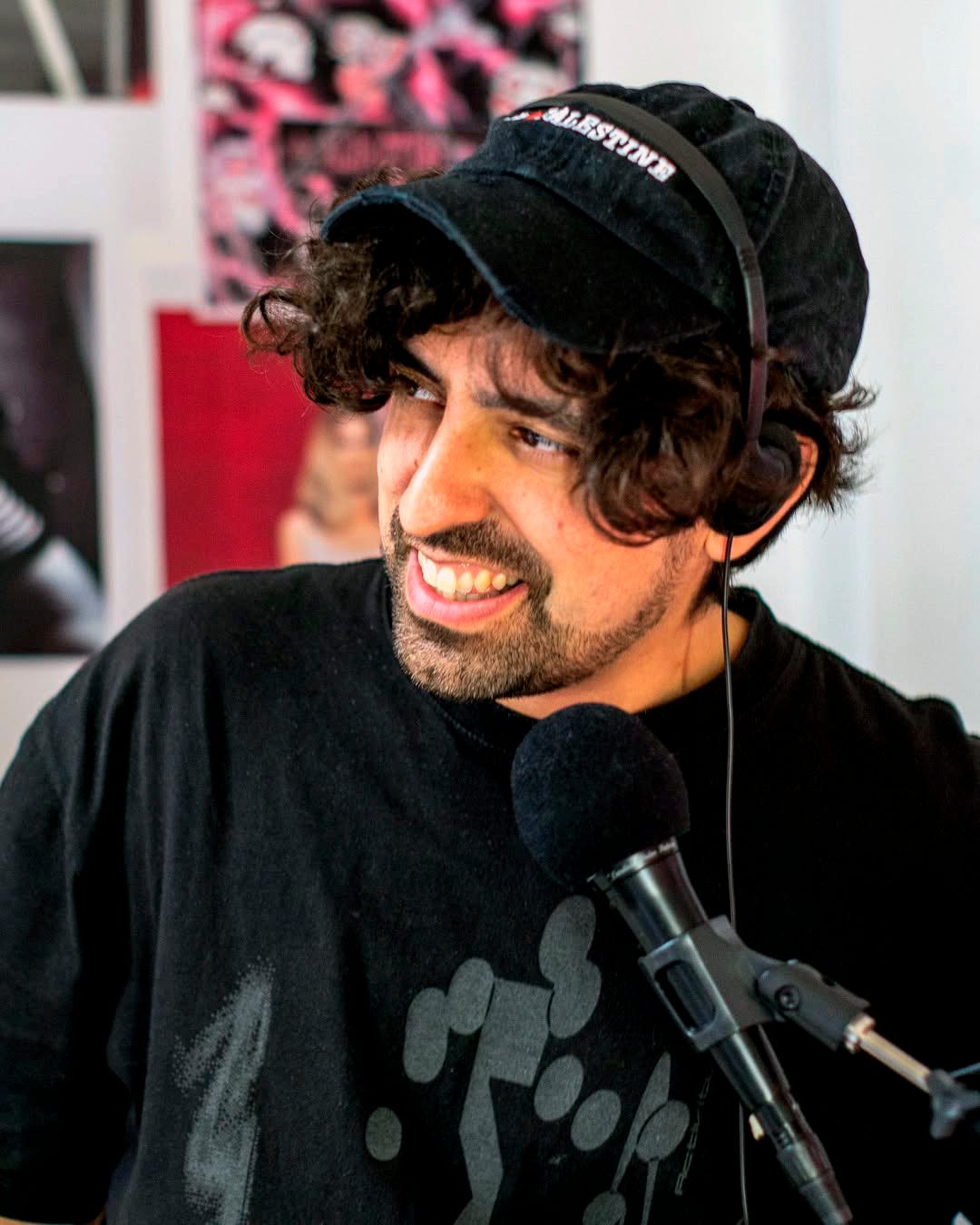
Still Making Art: Ok recording...
Yeah, I’m good. I’m in Brussels right now, trying to sort out my life, playing a bit of sublet Tetris, learning French every morning... How are things in Amsterdam?
Eurico Sá Fernandes: Nice. I’m also moving away.
SMA: When are you moving?
ESF: End of November, the 30th.
SMA: Damn to Korea?
ESF: Yeah.
SMA: You’ve been in Amsterdam for a while.
ESF: Yeah.
SMA: You also seemed a bit done with it, right?
ESF: I mean, it was fun with the radio and stuff, but it’s still like, you know, there’s no surprises anymore.
SMA: Yeah, you kind of have to make your own surprises. So, do you want to introduce yourself and what you’re doing in Amsterdam?
SMA: Would you say you’re like a retired artist now? You kind of exited the personal art pursuit.
ESF: Yeah, I mean, yes and no. I sort of decided to retire from the arts, but in the sense of a career within the arts, I would say. I think there are two personas that I’m part of. One is the person that is the web developer and the other person that is more creative. I decided to really just go completely separate under these two personas and to not have any necessity to be profitable or make money or even sustain myself through the art. So in that sense it’s a retirement, it becomes a hobby, but a hobby that I really care about.
I can make money through other avenues and then it’s less stressful. Also, I feel like the work that I would do now is much more detached from that idea of having to fulfill someone else’s expectation and criteria or something. I’m just completely free to do whatever I want. That’s really necessary for me. Especially coming from design, when I went into Dirty Art, of course I was a bit confused about where I sit. I was trying to do the art thing, but there was always the idea of like, this has to be consumed by someone else, right? So I don’t think I could really fully engage freely in my artistic practice. I think I’m much more free now to just do whatever I want. Also, I’m older, right? I think once you pass 30, you start not caring about what other people think.
SMA: Yeah, a bit more realistic, a bit less starry-eyed. I remember I did your interview for the Dirty Art Department and I was thinking, I think I even said, did you consider applying for Design? Because it was a design portfolio, but then it was clear you had the conviction to really expand and work it out, like work out the bridge or work out something different. But I was wondering, do you think you felt apprehended to take the role of an artist, which is more front-end, compared to being a back-end developer, supporter, collaborator…
ESF: Yeah. I still do some work as a designer. I tend to do more web stuff, but I’m still in a role where I need to be a protagonist because I’m managing. So in that sense, I’m still very much in the forefront. I do some work here and there in terms of design work if I care about it—I do some design work for my collective (Caixa Cartão Collective) in Porto, album covers and some identity. I do a lot of this stuff for SOORT. I get asked to do stuff like the Dirty Art website, of course, design and development. We just did a workshop and we’re developing a typeface also. But having a stable job for me is really important at least at this point in my life. Even if I do these extra projects, I treat them as bonuses almost because I don’t necessarily need them. But if I get fulfilled somehow artistically or some other way, I would do it.
SMA: Yeah. I mean, it’s also just a certain format of making work. Of course you could definitely say your work with Big Toilet and the radio and the curatorial socially engaged work you do.
ESF: I have this role within the development, working for a company, managing people, managing the development team and stuff like that. And then I have my kind of hobby that also takes a lot of my time and it’s really important for me. I don’t think I could have only one or the other. That’s why I say two detached personas. Within that persona, within the artistic world, I still call myself an artist. I would say artist, producer, maybe DJ. And one important part is a cultural organiser. I really like to do and start projects that have some kind of cultural interaction between people. That’s sort of what I do.
SMA: I think “developer” is nice. I was just thinking about a nice term for both brackets, your commercial work and your community building work. It’s like you’re developing communities or developing a network between young musicians or DJs.
And what is the origin story of Big Toilet? I remember you really desired to move into this type of work and you were working on it with your own project, SOORT, which is still running, right? And then it kind of developed in tandem to that.
ESF: I wanted to make and release music from myself and other people around me. When I started to put out my music I felt like it was a bit too much to advertise myself on my own, like “look at me.” So I thought it would be nicer to just create a label that can have this kind of more community feel. I mean, I had a lot of ideas in the beginning. I wanted to have people joining, a bit like we do in Caixa Cartão Collective where there’s so many people and some people do videos and people do design, there’s producers, rappers, stuff like that. So I wanted to sort of build something like that on my own within the community that was around me in Amsterdam. Eventually, it didn’t really work out in the way that I initially intended. I did start releasing music but until now I only release either songs in collaboration with me or recorded and released the EP from Kitty Maria and Élise Ehry. But initially, it was just me releasing my own music through this kind of entity that was a label. Then I started producing parties with Frederique Gagnon. We started making these parties in Amsterdam in people’s studios or spaces that we could find. It wasn’t really what I wanted from the label. I didn’t necessarily want it to become an entity that puts out shows or makes club nights or anything like that. I just really wanted to just have more like releasing music and new stuff other than just doing club nights. So it was a bit reductive, I think. I enjoyed it, but it wasn’t really giving me the thing that I thought that I wanted from the label. I think the last party that we did was one of the New Year parties, which lasted until the morning and a bit more. That was really, really super tiring. So we kind of took a break after that and then we never really got back into it. A few months after, Goy started renting the studio, subletting a desk in my studio. I had all the gear from the mixer and stuff. Then we started talking about making a radio and then eventually we just did it. It was really simple somehow.
SMA: Yeah, organic. I think it’s because, you know, doing club nights is very much a young person’s game. You’re there, you have to stay sober and organise things and then clean up. With your radio format, you can platform these people anyway without the mess.
ESF: Yeah, and somehow it leaves a more lasting legacy of it. I think club nights are a bit disposable somehow. It feels like you do it, everyone has a bit of fun, and then there’s no record or anything of it. It just felt like a lot of work for not so much reward at the end. Especially having to bring everything into the venues, there’s a whole lot of logistics that need to be done. Whereas in the radio, we still do a lot of stuff outside, but somehow we made it that it just makes it a lot easier for us to do it.
SMA: In a sense, the aspect that it’s temporary is kind of romantic in a way, but in the end, it’s just loads of people getting pissed and then you have to clean up.
ESF: Yeah, and that makes sense. I kind of now understand why clubs exist, because you need a sort of system and a place for that to happen regularly. That’s what we kind of found with the radio, let’s make something that we can do regularly that doesn’t take so much production every time we have to do it. Especially because we are just two people, we kind of have to minimise the overhead.
SMA: And, evident question, who came up with the name?
ESF: We were just looking for a name. We were just having dinner one time and we just had this idea of starting the radio and we’re like, we cannot start a radio without a name. So we were just having dinner at De Sering and Aidan was there. It was me, Goy, Aidan, and we were actually waiting for a gig at De Sering. Then we started just jamming names. De Sering has quite a big toilet, the toilet space is kind of big. We kind of liked the word “big.” I think we had other words also that we liked, but we wanted something that wasn’t serious. We didn’t want to take ourselves too seriously because there’s already a lot of seriousness within the music scene in Amsterdam. We wanted to not be put in the same box, to be something that is a bit more free and more punk, that kind of vibe. Especially because we don’t have the resources and we don’t come from music at all. So why would we take ourselves so seriously? So it had to be something a bit more punk. We were looking for words and we really liked the word “big.” Then we just went around, big beer, big this, big that, big toilet. At some point we pitched some names around to the bartender, to the people around the space, and they liked Big Toilet. That was kind of it. I think it works really well because once you say the name, people suddenly relax, you know?
SMA: So it’s like the “big” is the fact that you want to be ambitious and the “toilet” is taking the seriousness away. And I guess the functionality of a toilet, which is universal, is where you want to relax… As soon as I heard it, I was like, okay, I know Goy’s sense of humour a bit and I can see that moment where she was just announcing the idea.
SMA: What’s going to be the future of the project then? Because, if you’re moving to South Korea, are you going to continue the project or are you going to do your own thing? What’s the plan there?
ESF: We actually had a back-to-back interview on the last episode, talking about that. My wish is that Goy can keep doing it for many years. I will be attached to Big Toilet as well. If everything goes well, the idea is to start doing it there as well. So we would have episodes—one episode here, one episode there, and kind of go back-to-back. Use the same stream and just go one day is Amsterdam, next week is Seoul, and then back to Amsterdam, back to Seoul. I mean, it’s probably going to be more dynamic than that, but that’s sort of the idea. With that said, I probably need some time to settle down there first. I mean, there are some people that I already know over the years. I asked them to come to Big Toilet, so I don’t have a community there yet, but I do know some members of the community within the music scene. I hope they would be interested enough to participate. But I don’t know, there is also a cultural thing to it, whether people are happy to just come and play and be in a less serious setting, because our episodes, when we stream, it’s really more like a living room situation rather than like a serious radio booth situation. But there are definitely some really cool places in Seoul that do have a similar vibe. I wish somehow we can maybe do it through other people and build more of a community. But yeah, this is kind of a crucial moment, I think, for Big Toilet, because it’s really an expanding moment. Not only am I leaving and leaving a vacuum that has to be filled, but also going there, I also don’t have a person like Goy with me.
SMA: I mean, it makes a lot of sense to expand. It would be super interesting to expand the network to Korea. In Amsterdam, I saw it had this really quick network effect. I don’t know how much work you had to do to curate people, but all the younger artists and musicians in the city were really drawn to the project.
ESF: Within Amsterdam, the way that we did it was, I mean, it just was so simple. People just approach you and you talk about Big Toilet, they laugh and then they ask what it is. And then they’re like, oh yeah, for sure, I would love to do something, you know? So the ball really rolls really easily. Whether that can happen in Seoul, it’s a question mark. But yeah, hopefully yes.
SMA: Yeah, because I don’t know exactly what the scene is like there. But it seemed like in Amsterdam, people were just urging for these kinds of platforms. Like the Gallery Ellipsis project I produced had a crazy network effect because I guess I was offering something specific to that demographic. It was just very, very quick. But Seoul seems to be pretty cool and it seems to have an interesting creative scene. I don’t know what that would be in terms of an underground creative scene. But it’s quite common for these platforms to exist, even if they’re a bit more official, like NTS or Kiosk or something like that.
ESF: Actually, there was one DJ that came from Korea, she came to play a gig here and she came with another person that was also playing at the same party. I knew this other person already from before. When she came, I asked this other person that I already knew to come and play at Big Toilet, and then they both came. When I went to Korea last time, I did a show—I did a gig in one place, and I asked those two people to also DJ. When she was introducing the gig to their community, she was saying, “Oh, this is Eurico from Big Toilet,” and she was saying this is really how Seoul Community Radio was in the beginning and stuff like that. She really liked it. So there’s probably really the necessity also for these more informal settings and places to be less serious and more—I think once you go to play at NTS, for instance, or Seoul Community Radio, it’s like a stamp of approval. But you kind of need places before that. If those places don’t exist, then where do you start?
SMA: Yeah, totally.
ESF: And I think that’s what Big Toilet does well, is to be that starting place for a lot of people. We see over the years—there are people that did their first set with us, played first with us, and now they are playing in other places.
SMA: It’s like potty training.
ESF: Yeah, kind of like that. That’s the best way to put it, actually.
SMA: For your own work, are there any particular influences? Are you still making music or what’s the plan there?
ESF: Yeah, I’m making music. I lack the discipline to release it regularly. But I think this is what I really want to focus on this coming year, to be consistent. Because I have a lot of music that I just sit on for a while. It’s time to put some stuff out. I did my first full-length EP this year. The idea was actually to release at least every quarter or something. But I think sometimes I get stuck on the same thing for a while. I think going to Korea, being maybe slightly more isolated in a sense, would also help me finish those things up, or at least that’s my idea.
SMA: Are you a little bit worried about the cultural difference in terms of being there? As you mentioned the word “isolated”, sometimes if it’s a different culture or it’s quite far or with the language difference, it can feel a little bit isolating.
ESF: Yeah, I think with the language for sure. I mean, I understand a bit of Korean now, but it’s also my intention to learn it properly. So I think to be around people would be really important and learn the language as well. But yeah, I think more isolated because I don’t know as many people. In Amsterdam, if I go out on my own, I’ll always bump into someone that I know. So also, I’m a bit worried. I felt like it was a lot more isolating than Amsterdam because people are more far in the city. But hopefully that’s not the case in Seoul. I’m more worried about being in a big city again than the cultural part of making connections with people.
SMA: Yeah, it seems pretty culturally exciting, but yeah, also like a massive, growing city, super, super fast-paced. But I’m sure it’ll be fine. You’re already well connected, obviously, with your wife.
ESF: Yeah, I think it’s also important that I go there with something to offer, right? Culturally as well, being Big Toilet or my music or whatever.